





Keep Your Gut Calm When Your Family Is Not
We’ve all been there. You’re sitting at the dinner table. Maybe it’s a holiday feast, a birthday party, or just a chaotic Tuesday night. The volume creates a dull roar, a political debate is heating up at the other end of the table, and the kids are running laps around the kitchen island.
You love them, deeply. But right now? Your stomach is in knots.
It’s not just in your head. It’s in your gut. There is a direct line of communication between your brain and your digestive system, and when family stress ramps up, your digestion often shuts down.
Here is why that happens, and more importantly, how you can keep your gut happy even when the family dynamic gets intense.
The Science: Why "Family Drama" = "Stomach Drama"
Your body operates on two main setting frequencies regarding your nervous system:
-
Rest and Digest (Parasympathetic): This is the chill zone. Blood flows to the stomach, enzymes are released, and digestion happens smoothly.
-
Fight or Flight (Sympathetic): This is the stress zone.
When the conversation gets heated or the environment becomes chaotic, your brain signals a "threat." Your body doesn't know the difference between a tiger chasing you and your uncle asking why you aren't married yet.
To survive the "threat," your body diverts energy away from digestion and into your muscles. The result? Bloating, cramping, indigestion, and that heavy "brick in the stomach" feeling.
5 Ways to Hack Your Gut-Brain Connection
You can’t always control the chaos around you, but you can control how your gut reacts to it. Here is your survival guide.
1. The "Bathroom Break" Breath
If you feel your chest tightening during a family gathering, excuse yourself. Go to the bathroom or a quiet bedroom for just two minutes.
Once you are alone, practice Box Breathing:
-
Inhale for 4 seconds.
-
Hold for 4 seconds.
-
Exhale for 4 seconds.
-
Hold for 4 seconds.
This physically forces your body to switch from "Fight or Flight" back to "Rest and Digest." You are manually telling your vagus nerve (the superhighway between brain and gut) that you are safe.
2. Chew Like You Mean It
When we are anxious or surrounded by loud noise, we tend to inhale our food without chewing. Large chunks of food are much harder for your stressed-out stomach to break down, leading to gas and bloating.
Make a game of it: Try to chew each bite 20 times. It forces you to slow down and signals to your body that it is time to eat, not time to run.
3. Set a "Digestive Boundary"
It is hard to digest food while you are digesting an argument. If a stressful topic comes up while you are eating, try to pivot.
A simple phrase like, "I’d love to talk about this, but can we save it for after dinner? I want to enjoy this amazing food," can work wonders. If the chaos continues, focus on the sensory details of your meal (the taste, texture, and smell) to keep your brain grounded in the present moment.
4. The Post-Meal Walk
Instead of slumping onto the couch immediately after a heavy meal (and heavy conversation), ask if anyone wants to go for a generic "block walk."
Gentle movement helps stimulate gastric motility (moving food through your system) and regulates blood sugar. Plus, the fresh air provides a much-needed mental reset. Even 10 minutes makes a difference.
5. Support Your System
Sometimes, you know the stress is coming. Whether it’s a prebiotic soda, a digestive enzyme, or your daily probiotic, ensure you are reinforcing your gut microbiome before the stress hits. Think of it as putting armor on your tummy before walking into battle.
The Takeaway
Family is wonderful, but they are also loud, messy, and complicated. You don’t have to sacrifice your physical comfort to survive a family gathering.
By slowing down your breath, chewing mindfully, and taking small breaks, you can keep your YayDay going strong, no matter what is happening at the dinner table.
Don't Go Into Dinner Unprotected
Deep breathing helps, but sometimes you need backup.
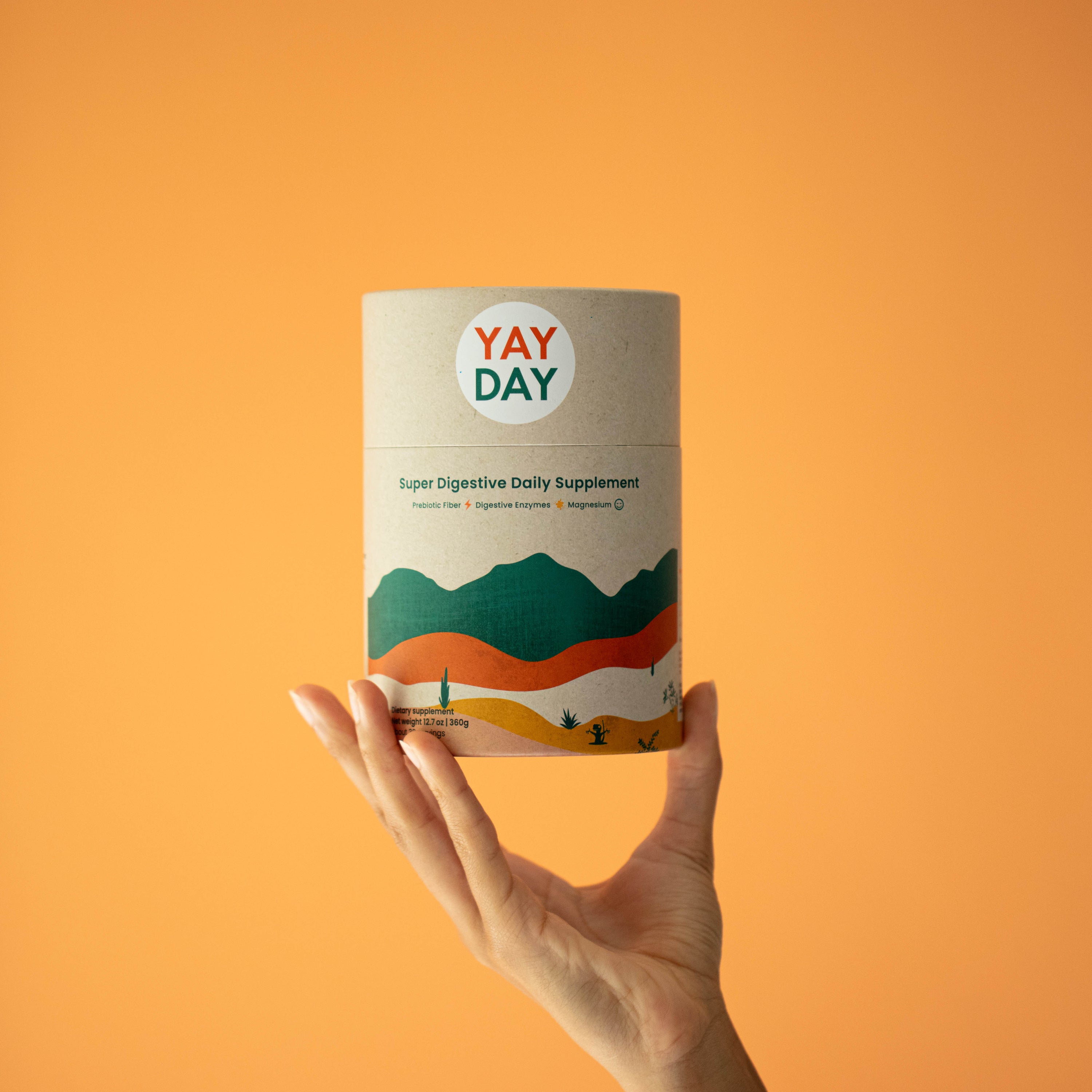
Don't let family drama ruin your digestion. Take YayDay before the meal to stop the bloat before it even starts.
Share:
Sleep Better, Feel Better. It's That Simple.
We know that quality sleep and good gut health are the foundation of feeling your best. That's why YayDay was created to tackle both—overnight.
Dr. Roshini Raj, MD, explains that taking YayDay before bed allows the calming magnesium to help you drift off to sleep while the fiber blend gently gets to work. The result? You wake up feeling rested and your digestive system is primed for a comfortable and predictable morning.
- Calm Nights: Magnesium helps you unwind for deep, restorative sleep.
- Great Mornings: A gentle fiber blend works overnight for a smooth and satisfying start to your day.
Stop waiting for a good day to happen. Start one the night before with YayDay.
Blog posts
-

Feeling It After the Long Weekend? Here's How to Get Your Gut Back on Track
If your stomach is staging a quiet protest this morning, you're not alone. Three days of grilling and drinking will do that. The good news: your gut recovers faster than the wellness industry wants you to believe, and seven small choices over the next few days will get you there.
-

Sunshine, Vitamin D, and Your Gut: The Science You Didn't Know You Needed.
Your skin glows in summer. Your gut wants credit.
Turns out sunlight does more than lift your mood. There's genuine science linking UVB light to measurable changes in your gut microbiome. We broke down what the research actually says, what Vitamin D does for your gut lining, and why going outside might be the most underrated thing on your gut health to-do list.
-

Your Gut and Your Brain Are in a Relationship. It's Complicated.
Before that big presentation, did your stomach hurt? Before an important event, did you get diarrhea? Did you lose your appetite completely when something went wrong, or eat the entire contents of your kitchen when you were anxious? That is...


