





Is Your Gut Ready for Spring? 5 Signs It Needs a Reset.
Spring is here. Your gut has thoughts.
There's a particular kind of feeling that arrives in late March. Not quite sick, not quite well. A low-grade sluggishness that coffee doesn't fix, sleep doesn't shift, and a weekend of good intentions hasn't resolved. You might have blamed the weather, the busy period at work, or simply decided this is just how you feel now.
It might not be any of those things. It might be your gut.
The digestive system is more seasonal than most people realize. Your gut microbiome — the vast community of bacteria that governs your digestion, immunity, mood, and energy — shifts its composition across the year in response to changes in light, temperature, stress, and food availability. And after winter, when the diet tends to be heavier, the days shorter, and sleep more disrupted, many people's guts arrive at spring in a state that politely could be called 'in need of a refresh.'
Not broken. Not diseased. Just out of tune.
Here are the five signs to look for.
Sign 1: You're bloated more often than not
Occasional bloating after a large or unusual meal is normal. Persistent bloating — that familiar tightness or distension that arrives most afternoons regardless of what you ate — is your gut telling you something isn't running smoothly.
Winter diets tend to be lower in fiber and plant diversity, which means the gut bacteria responsible for healthy fermentation and gas regulation are often undermined by spring. The result is a digestive system that struggles to process even moderate meals comfortably.
It's worth noting what persistent bloating is usually not: a gluten intolerance you've suddenly developed, a serious underlying condition, or something that requires a dramatic dietary overhaul. In most cases, it's a microbiome that's underfed, under-diversified, and in need of the right inputs.
Bloating is your gut's way of raising its hand. It's asking for attention, not a punishing diet.
Sign 2: Your energy crashes in the afternoon — every afternoon
The 2pm slump is so common that most people have accepted it as a fixture of adult life. It doesn't have to be.
A significant portion of your body's serotonin — the neurotransmitter most associated with mood, focus, and the regulation of your sleep-wake cycle — is produced in the gut. When your gut microbiome is imbalanced, serotonin production is disrupted. This shows up as the kind of afternoon fatigue that isn't fully explained by how much sleep you got the night before.
Your gut also plays a central role in blood sugar regulation. An underperforming digestive system is less effective at managing glucose absorption from meals, which contributes to the energy spikes and crashes that make afternoons feel like such hard work.
If you've been reaching for a second (or third) coffee by 2pm most days, and it's only marginally helping, your gut may be the more productive place to focus.
Sign 3: Your digestion is unpredictable
Inconsistency is one of the most common gut complaints, and one of the most overlooked. Not a dramatic problem, just a general sense that your digestion isn't reliable. Some days things move comfortably and regularly. Others you feel congested, sluggish, or suddenly urgent. You've stopped being able to predict how you'll feel after meals.
Unpredictable digestion is typically a sign of microbiome imbalance. Your gut motility — the muscular contractions that move food through your digestive tract — is regulated in part by your gut bacteria and the signals they send. A less diverse, less well-fed bacterial community sends less reliable signals, which produces less consistent results.
Magnesium plays an important role here too: it's essential for the muscle contractions involved in digestion, and deficiency — which is extremely common — is a significant contributor to sluggish or irregular motility.
Sign 4: Your skin is telling you something
The gut-skin axis is one of the more underappreciated connections in human physiology. The state of your gut microbiome is reflected in your skin, not through any mystical mechanism, but through inflammation.
When the gut lining is compromised or the microbiome is imbalanced, the resulting low-grade systemic inflammation can manifest as breakouts, dullness, redness, or flare-ups of conditions like eczema and rosacea. The timing often feels random, which is why people reach for new skincare products before considering their diet. But in many cases there's a direct line from gut health to skin behavior.
If your skin has felt more reactive than usual this winter, or you've noticed a general lackluster quality that isn't responding to your usual routine, it's worth considering whether your gut might be contributing.
Sign 5: Your mood has been harder to manage
This one is the most personal to acknowledge, and also the most important.
Your gut produces approximately 95% of your body's serotonin and communicates directly with your brain via the vagus nerve — a superhighway of neural signals that runs bidirectionally between your digestive system and your central nervous system. The health of your microbiome is directly linked to anxiety levels, stress response, emotional resilience, and cognitive clarity.
The post-winter mood dip that many people experience isn't purely about the lack of sunlight or the grey days. For a significant proportion of people, it has a gut component: a microbiome that's been running on a low-diversity, high-processed-food winter diet, producing less of the neurochemicals that support stable mood, and sending more inflammatory signals up to a brain that's already dealing with seasonal stress.
This isn't to say gut health is a cure for mental health challenges. It isn't, and anyone dealing with significant mood difficulties should speak to a healthcare professional. But it is to say that the gut-brain connection is real, well-evidenced, and worth taking seriously when you're trying to understand why spring doesn't feel as fresh as it should.
Your mood lives partly in your gut. That's not a metaphor. It's neuroscience.
So, is your gut ready for spring?
If you recognized yourself in two or more of the signs above, the answer is probably: not quite. But the genuinely good news is that the gut is one of the most responsive systems in your body. Changes in diet, sleep, and routine produce measurable microbiome shifts within 48 to 72 hours. You don't need a dramatic protocol. You need consistent, well-chosen inputs.
Next Tuesday, we're publishing the full Spring Gut Audit — exactly what to clear out, what to add in, and how to build the habits that turn a winter gut into a spring gut that actually works. Consider this your diagnostic. That's your prescription.
Your reset starts now.
Start Your Reset — Shop YayDay
Share:
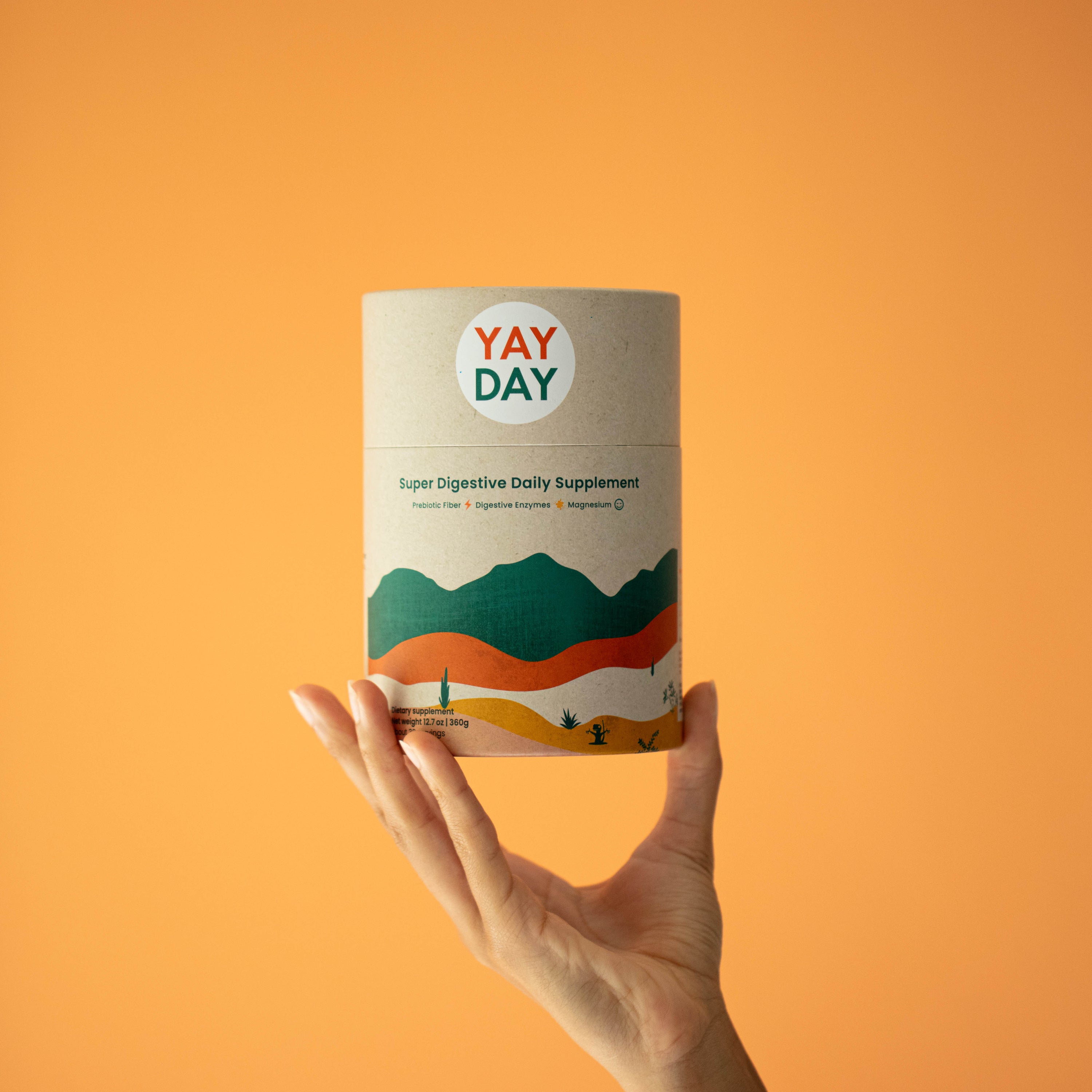
Sleep Better, Feel Better. It's That Simple.
We know that quality sleep and good gut health are the foundation of feeling your best. That's why YayDay was created to tackle both—overnight.
Dr. Roshini Raj, MD, explains that taking YayDay before bed allows the calming magnesium to help you drift off to sleep while the fiber blend gently gets to work. The result? You wake up feeling rested and your digestive system is primed for a comfortable and predictable morning.
- Calm Nights: Magnesium helps you unwind for deep, restorative sleep.
- Great Mornings: A gentle fiber blend works overnight for a smooth and satisfying start to your day.
Stop waiting for a good day to happen. Start one the night before with YayDay.
Blog posts
-

Feeling It After the Long Weekend? Here's How to Get Your Gut Back on Track
If your stomach is staging a quiet protest this morning, you're not alone. Three days of grilling and drinking will do that. The good news: your gut recovers faster than the wellness industry wants you to believe, and seven small choices over the next few days will get you there.
-

Sunshine, Vitamin D, and Your Gut: The Science You Didn't Know You Needed.
Your skin glows in summer. Your gut wants credit.
Turns out sunlight does more than lift your mood. There's genuine science linking UVB light to measurable changes in your gut microbiome. We broke down what the research actually says, what Vitamin D does for your gut lining, and why going outside might be the most underrated thing on your gut health to-do list.
-

Your Gut and Your Brain Are in a Relationship. It's Complicated.
Before that big presentation, did your stomach hurt? Before an important event, did you get diarrhea? Did you lose your appetite completely when something went wrong, or eat the entire contents of your kitchen when you were anxious? That is...


