





Breaking Up Is Hard on Your Gut (Literally)
Heartbreak affects more than your heart. Science says it's messing with your microbiome, too.
We've all heard that breakups are gut-wrenching. Turns out, that's not just a metaphor. Recent research reveals that romantic relationship dissolution doesn't just break your hear. It literally disrupts your gut microbiome, the trillions of bacteria that play a crucial role in everything from digestion to mood regulation.
So while you're ugly-crying to Taylor Swift at 2 AM and contemplating texting your ex, your gut bacteria are having their own crisis. But here's the good news: science also shows us how to help both recover.
The Science Behind Your Breakup Belly
Studies published in Frontiers in Microbiology and available through PubMed Central have found that people going through romantic relationship dissolution experience decreased gut microbiota diversity. Basically, your gut loses some of its healthy bacterial variety right when you need it most.
Why does this matter? Your gut microbiome is like a bustling city of microorganisms, and diversity is key to keeping that city running smoothly. When you're stressed (hello, breakup), your body produces cortisol, which can wreak havoc on this delicate ecosystem. The result?
-
Digestive issues (the kind that make you cancel plans)
-
Sleep disruption (tossing, turning, and stalking their Instagram)
-
Mood swings that rival any rom-com protagonist
-
Weakened immune system (because apparently heartbreak wants you sick too)
The gut-brain axis, the communication highway between your digestive system and your brain, means that when your gut is struggling, your mental health takes a hit too. It's a vicious cycle: stress damages your gut, and a damaged gut makes it harder to manage stress.
The Fiber Fix: Feeding Your Way to Recovery
Here's where the research gets hopeful: dietary fiber acts like fertilizer for your gut bacteria, helping to restore that crucial diversity. Think of it as giving your gut microbiome the tools it needs to rebuild after the earthquake of heartbreak.
Fiber-rich foods feed the beneficial bacteria in your gut, supporting everything from regular digestion to serotonin production (yes, most of your feel-good hormone is actually made in your gut, not your brain).
But when you're dealing with heartbreak, who has the energy to meal prep kale and quinoa? That's where smarter supplementation comes in.
Self-Care for Your Gut During Tough Times
Enter YayDay. Think of it as your gut's supportive best friend during the breakup recovery phase. This isn't just another supplement; it's specifically designed to address two of the biggest challenges during emotional stress: gut health and sleep.
The fiber + magnesium combination works double duty:
-
Fiber supports gut microbiota diversity, helping restore the bacterial balance disrupted by stress
-
Magnesium promotes better sleep, which is absolutely crucial when you're dealing with 3 AM anxiety spirals
-
Together, they support the gut-brain axis, helping break that stress-gut damage cycle
It's self-care that actually addresses what's happening inside your body, not just what you're posting about it on social media. Healing from heartbreak, one gut-friendly scoop at a time.
Single and Ready to... Digest?
Let's be real for a second: breakups are hard. But you know what shouldn't be? Your bathroom experience. (The only ghosting you need right now is... in the bathroom. Sorry, we had to.)
This is about more than just moving on from a relationship. It's about moving forward with your health. Self-love isn't just face masks and bubble baths (though those are great too). Real self-love means taking care of your body at a cellular level, supporting the systems that support your wellbeing.
Because here's the truth: you deserve to feel good. Not just emotionally recovered, but physically thriving. Your gut health affects your energy, your mood, your sleep, your immune system, basically everything that makes you feel like yourself again.
The Bottom Line
Heartbreak is complicated, but supporting your gut health doesn't have to be. The science is clear: relationship stress impacts your microbiome, and fiber can help restore it. Combine that with magnesium for better sleep, and you're giving your body the tools it needs to heal.
So while you're working on healing your heart, don't forget about your gut. It's been through a lot too.
Single and ready to digest? We'll drink (a fiber-rich smoothie) to that.
Share:
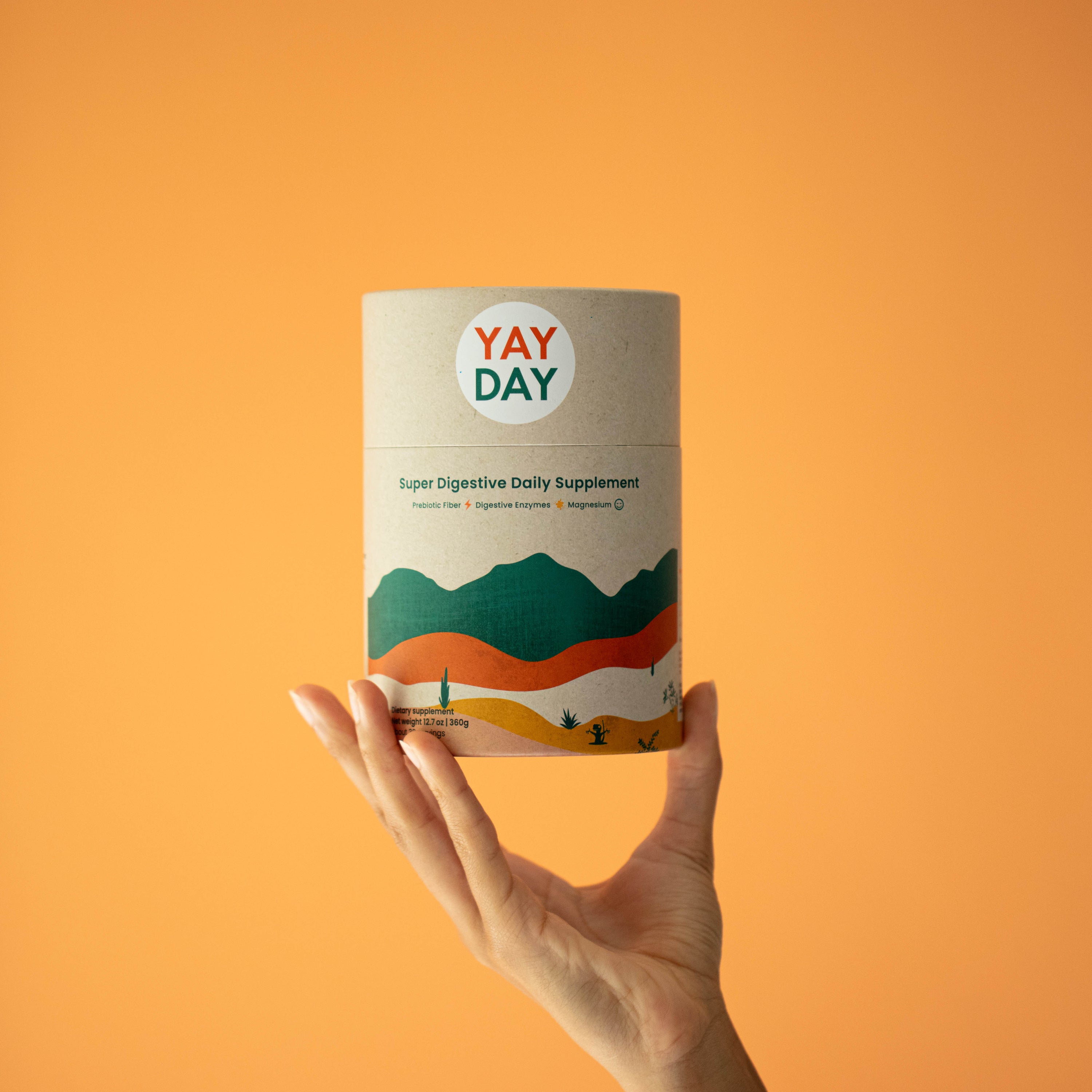
Sleep Better, Feel Better. It's That Simple.
We know that quality sleep and good gut health are the foundation of feeling your best. That's why YayDay was created to tackle both—overnight.
Dr. Roshini Raj, MD, explains that taking YayDay before bed allows the calming magnesium to help you drift off to sleep while the fiber blend gently gets to work. The result? You wake up feeling rested and your digestive system is primed for a comfortable and predictable morning.
- Calm Nights: Magnesium helps you unwind for deep, restorative sleep.
- Great Mornings: A gentle fiber blend works overnight for a smooth and satisfying start to your day.
Stop waiting for a good day to happen. Start one the night before with YayDay.
Blog posts
-

Feeling It After the Long Weekend? Here's How to Get Your Gut Back on Track
If your stomach is staging a quiet protest this morning, you're not alone. Three days of grilling and drinking will do that. The good news: your gut recovers faster than the wellness industry wants you to believe, and seven small choices over the next few days will get you there.
-

Sunshine, Vitamin D, and Your Gut: The Science You Didn't Know You Needed.
Your skin glows in summer. Your gut wants credit.
Turns out sunlight does more than lift your mood. There's genuine science linking UVB light to measurable changes in your gut microbiome. We broke down what the research actually says, what Vitamin D does for your gut lining, and why going outside might be the most underrated thing on your gut health to-do list.
-

Your Gut and Your Brain Are in a Relationship. It's Complicated.
Before that big presentation, did your stomach hurt? Before an important event, did you get diarrhea? Did you lose your appetite completely when something went wrong, or eat the entire contents of your kitchen when you were anxious? That is...


